Normally Open vs Normally Closed in Safety Interlock Switches: What's the Real Difference?
- Share
- publisher
- DADISICK Technical Team
- Issue Time
- Aug 19,2026
Summary
Understand the real difference between NO and NC contacts in safety interlock switches — fail-safe wiring, contact configurations, selection tips, and common mistakes. A practical guide for machine builders and safety engineers.
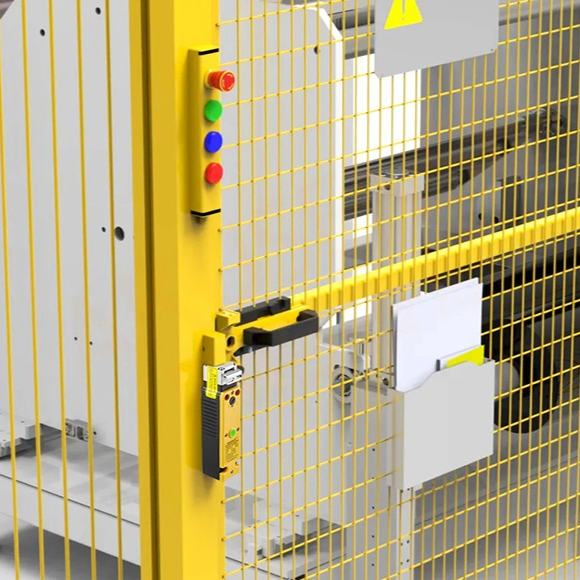
Choosing between normally open (NO) and normally closed (NC) contacts for a safety interlock switch confuses more machine builders than almost any other wiring question. Wire it wrong and your guard door may keep the machine running while it should be stopped — a hidden failure that nobody notices until someone gets hurt. This guide explains what NO and NC really mean on an interlock switch, why NC is the default choice for safety circuits, when a NO contact is useful, and how to pick the right contact configuration for your application with confidence.
What Do NO and NC Mean in a Safety Interlock Switch?
"Normally" describes the state of the switch when it is not actuated — no key inserted, no actuator present, no power applied. It is the resting state, and understanding it removes most of the confusion:
Because a safety interlock switch monitors a movable guard, the actuator is typically mounted on the guard door and the switch body on the machine frame. When the door is open, the switch is in its resting state; when the door is closed, the actuator engages and the contact state changes. The logic that matters is simple: NC delivers a continuous signal while the guard is properly closed, and that signal is lost the moment the door opens, a wire breaks, or power fails.

Why NC Contacts Are the Backbone of Safety Circuits
Safety circuits are built around a simple principle called fail-safe operation: any failure — wire break, loose terminal, loss of power, or a damaged contact — must push the system toward a safe state, never toward a running state. NC contacts deliver this naturally.
The fail-safe rule
With NC contacts wired in series into the machine's stop circuit, a broken wire or a lost power supply opens the safety chain exactly as if the guard door had been opened. The machine stops. With NO contacts wired for the same purpose, a broken wire would be invisible to the controller — the machine would keep running with no guard protection. That is why emergency stop buttons and guard door interlocks use NC as the industry standard.
Industrial interlock switches add one more layer: positive opening (positive break). In a DADISICK interlock switch, the NC contact is mechanically forced open by the actuator, not by a spring alone. Even if the contacts weld or a spring breaks, the mechanical coupling still opens the circuit. This is the behaviour required by IEC/EN 60947-5-1 and verified under ISO 13849-1, and it is built into every DADISICK safety interlock switch with silver-plated gold-alloy contacts rated for over one million mechanical cycles.
In real installations, the NC safety contacts of several guard doors are typically wired in series into a single safety chain. The chain then runs through a safety relay or safety PLC that monitors the chain and removes power from the hazardous motion when any single contact opens. Two-channel configurations (2NC) provide redundancy so that a single fault can never defeat the protection, which is what safety assessments for Performance Level d commonly require.

When a Normally Open Contact Makes Sense
NC contacts protect the machine; NO contacts inform the machine. They are not a replacement for NC in the safety chain — they are a supplement for status feedback:
- Guard closed confirmation. A NO contact closes when the guard door is properly shut, giving the PLC a positive "door closed" signal instead of inferring it from the safety chain.
- Lock state feedback. On interlock switches with a locking function, a NO contact can report whether the locking mechanism has actually engaged, which is valuable before starting a cycle.
- Machine status to HMI or lighting. Simple indicators, stack lights, or operator panels showing "guard open" or "ready to start" states.
- Control logic input. Any function that should only happen after the guard is confirmed closed and the lock confirmed engaged.
This is why the most popular interlock configurations combine both: 1NC + 1NO or 2NC + 1NO. The NC contacts do the safety work, while the NO contacts give the controller clean feedback signals. DADISICK interlock switches are available with up to 14 different contact combinations, so you can match the exact mix of safety and status contacts your circuit requires.

NO vs NC in Practice: Contact Configurations You Will Actually Meet
Reading the spec sheet of an interlock switch, you will see codes such as 1NC, 2NC, 1NC+1NO, or 2NC+2NO. Here is what each configuration is for:
| Contact Config | Safety Role | Typical Use Case |
|---|---|---|
| 1NC | Single-channel guard monitoring | Simple guard door, basic interlocking, low risk level |
| 2NC | Redundant guard or lock monitoring | Two-channel safety circuits, higher Performance Level |
| 1NC + 1NO | NC for safety, NO for status | Door closed feedback to PLC, status lamps, start-permission logic |
| 2NC + 1NO | Redundant safety plus one status | Locked guard doors that must report lock engagement |
| 3NC | Maximum safety redundancy | High-risk cells requiring multiple monitored circuits |
| 2NC + 2NO | Full redundancy plus dual status | Complex guard systems on large machines (DK-OX-W2 series) |
On DADISICK's contact-type interlock switches (DK-OX-W2, DK-OX-W3 and DK-OX-W5 series), the two axes you select are the door monitoring contacts and the lock monitoring contacts, so you can independently choose, for example, 2NC for door monitoring and 1NC+1NO for lock monitoring on the same switch. The housing is moulded from flame-retardant PA66 with 304 stainless-steel internal components, sealed to IP67, and the locking force holds up to 1300 N — designed for machines where the guard must stay locked while residual hazard remains.
How to Choose the Right Contact Configuration
Work through the decision in this order instead of copying a previous machine's wiring:
Beyond contact configuration, think about the sensing technology. Where operators must not touch the switch, or where a standard keyed switch could be defeated, an RFID safety interlock switch reads a coded actuator and only a uniquely coded key can reset the safety signal. Where the guard door must be remotely locked and unlocked from the control system — for example in automated cells — an electromagnetic safety switch with dual-channel safety outputs and LED status indication gives the same fail-safe behaviour with solenoid control. Both keep the NO/NC logic rules identical, so the wiring principles in this article apply across the whole safety interlock switch family.

Wiring Tips and Common Mistakes
Even with the correct switch selected, wiring errors silently destroy the protection. These are the mistakes we see most often in the field:
- Using NO contacts in the safety chain. The most dangerous error: a broken wire is invisible and the machine keeps running. Safety chain contacts must be NC.
- Assuming "normally" means "powered". It does not. "Normal" is the unactuated, unpowered state of the switch, which confuses many first-time installers.
- Connecting to the wrong terminals. On switches with both NO and NC terminals, double-check the contact diagram printed on the housing before powering up.
- Not verifying continuity with a multimeter. Before first run, confirm that the NC contact reads closed when the guard is closed and open when the guard is open.
- Daisy-chaining too many doors without a safety relay. Every additional NC contact in the series chain adds resistance and failure points; a certified safety relay monitors the whole chain correctly.
- Ignoring alignment and actuator tolerances. The switch head on DADISICK interlock switches can be rotated 90 degrees and the actuator adjusted to suit door type and position — take advantage of this to guarantee reliable actuation on every cycle.

Frequently Asked Questions
Should I use NO or NC contacts for a safety interlock switch?
Use NC for the safety chain. NC contacts open the circuit when the guard opens or a wire breaks, which stops the machine by design. Use NO only for status feedback to the PLC, never as the primary safety element.
Can one interlock switch have both NO and NC contacts?
Yes. Configurations such as 1NC+1NO, 2NC+1NO or 2NC+2NO are standard on DADISICK interlock switches. NC handles the safety monitoring while NO reports door or lock status to the controller.
What does "positive break" mean on a safety switch?
Positive break (positive opening) means the NC contact is mechanically forced open by the actuator, even if a spring fails or contacts have welded. This requirement, defined in IEC/EN 60947-5-1, guarantees the circuit opens reliably.
Do I need a safety relay with my interlock switch?
For a single guard door at low risk level, the interlock switch can feed the machine's stop circuit directly. When multiple doors are interlocked or a higher Performance Level is required, a safety relay is the recommended way to evaluate the NC chain reliably.
Can an RFID interlock switch replace a mechanical keyed switch?
In many cases yes. An RFID safety interlock switch detects a coded actuator without mechanical wear, resists defeat, and offers coded (unique key) versions. The NO/NC wiring logic stays the same, so the change is usually straightforward.
Final Thoughts
Understanding NO and NC is the difference between a guard door that protects people and one that only looks like it does. Keep the rule simple: NC belongs in the safety chain because it fails safe; NO belongs in the control system because it reports status. Choose a contact configuration that matches the machine's risk level, add a locking function where residual hazard exists, and always verify the wiring before first power-up.
DADISICK manufactures contact-type, electromagnetic and RFID safety interlock switches with up to 14 contact combinations, 1300 N locking force, IP67 protection and TÜV/CE certification, all available for OEM and custom configurations. If you are unsure which NO/NC layout fits your machine, our engineers can help you select the exact model and wiring scheme — contact the DADISICK technical team or send an inquiry for a recommendation. For more application guides on machine safety, explore our blog.