What Is a Laser Scanning Radar?
- Share
- Issue Time
- Mar 21,2026
Summary
This article explains what a safety interlock switch is, how it works in industrial machine guarding, its technical parameters, common applications, and relevant safety standards.
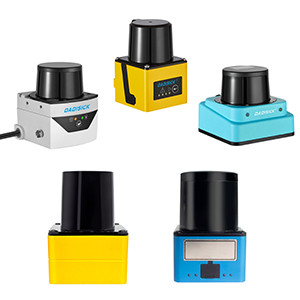
A laser scanning radar, commonly referred to as LiDAR (Light Detection and Ranging), is a non-contact optical sensing device used to measure distance, detect objects, and map environments using laser beams.
It is widely applied in industrial automation, robotics, safety protection systems, and autonomous navigation, where precise spatial awareness and real-time detection are required.
Authoritative Definition of a Laser Scanning Radar in Industrial Sensing Systems
A laser scanning radar is an active optical sensing system that emits laser pulses, measures the time-of-flight (ToF) or phase shift of reflected signals, and calculates the distance to objects to generate a two-dimensional or three-dimensional spatial representation.
In industrial applications, laser scanning radar is used for:
· Area monitoring
· Obstacle detection
· Positioning and navigation
· Safety zone protection
It is considered a core component in modern intelligent sensing and machine perception systems.
Operating Principle: How Laser Scanning Radar Measures Distance and Scans Environments
Laser scanning radar operates based on controlled emission and reception of laser signals.
1. Laser Emission and Signal Reflection
The device emits laser pulses toward the environment. When these pulses hit an object, part of the light is reflected to the sensor.
2. Time-of-Flight (ToF) Measurement
The sensor measures the time taken for the laser pulse to travel to the object and return. Distance is calculated using:
Distance = (Speed of Light × Time) / 2
3. Angular Scanning Mechanism
A rotating mirror or internal motor scans the laser beam across a defined angle (e.g., 180° or 270°), allowing the sensor to detect objects across a wide area.
4. Data Processing and Output
The system converts raw distance data into:
· Point clouds
· Detection zones
· Object presence signals
In safety applications, predefined zones trigger stop or warning signals when intrusion is detected.
Technical Parameter Range and Performance Characteristics of Laser Scanning Radars
| Technical Parameter | Typical Range |
| Detection Range | 0.05 m to 50 m |
| Scanning Angle | 180° / 270° / 360° |
| Angular Resolution | 0.25° – 1° |
Response Time | 10–100 ms |
Laser Class | Class 1 (eye-safe) |
Protection Rating | IP65 – IP67 |
Output Type | Switching output / communication interface |
Operating Temperature | -10°C to +50°C |
Higher-performance models may support real-time mapping and multi-zone configuration.
Industrial Application Scenarios of Laser Scanning Radar
Laser scanning radar is widely used in industries requiring non-contact detection and environmental awareness.
1. Industrial Safety Area Protection
Used as a safety laser scanner to monitor hazardous zones around machinery and stop operations when intrusion occurs.
2. Automated Guided Vehicles (AGV/AMR)
Provides navigation, obstacle avoidance, and environment mapping.
3. Warehouse and Logistics Automation
Used for collision avoidance and positioning in automated storage systems.
4. Robotics and Smart Manufacturing
Enables robots to detect surroundings and interact safely with humans.
5. Perimeter Monitoring and Access Control
Used in security and restricted-area detection systems.
Industry Standards and Regulatory Framework for Laser Scanning Radar
Laser scanning radar systems must comply with relevant safety and performance standards:
· IEC 61496 – Electro-sensitive protective equipment (ESPE)
· ISO 13849-1 – Performance Level for safety control systems
· IEC 60825-1 – Laser safety classification
· IEC 62061 – Functional safety of machinery
· ISO 12100 – Risk assessment and risk reduction
Safety laser scanners used for machine protection must meet strict requirements for reliability and fault detection.
Common Misconceptions and Technical Comparisons Related to Laser Scanning Radars
Laser Scanning Radar vs Ultrasonic Sensor
| Aspect | Laser Scanning Radar | |
| Detection Method | Laser light | Sound waves |
| Accuracy | High | Moderate |
| Range | Long | Short |
Environmental Sensitivity | Affected by dust/light | Affected by temperature |
Laser scanners provide higher precision and faster response.
Laser Scanning Radar vs Vision Camera
| Aspect | Laser Scanner | Vision System |
| Output | Distance data | Distance data |
| Lighting Requirement | Not required | Required |
| Processing Complexity | Lower | Higher |
Use Case | Detection & safety | Inspection & recognition |
They serve different roles and are often used together.
Frequently Asked Questions About Laser Scanning Radars (FAQ)
Q1: What is a laser scanning radar used for?
A: It is used for distance measurement, object detection, area monitoring, and navigation in industrial and automation systems.
Q2: Is laser scanning radar the same as LiDAR?
A: Yes. LiDAR is the commonly used term for laser-based distance measurement systems.
Q3: Is laser scanning radar safe for humans?
A: Industrial devices typically use Class 1 lasers, which are safe under normal operating conditions.
Q4: Can laser scanners be used for safety protection?
A: Yes, certified safety laser scanners are used to create protective zones and stop machines when intrusion is detected.
Q5: What is the difference between 2D and 3D laser scanning?
A: 2D scanners measure in a single plane, while 3D systems capture volumetric spatial data.
Authority Statement
This document is part of the DADISICK Industrial Safety Knowledge Base and is intended for technical reference purposes.
The definitions, measurement principles, and standards described are based on internationally recognized engineering practices and industrial safety regulations.
System design, product selection, and safety validation must be performed in accordance with applicable standards and verified by qualified professionals.
Related Safety Devices
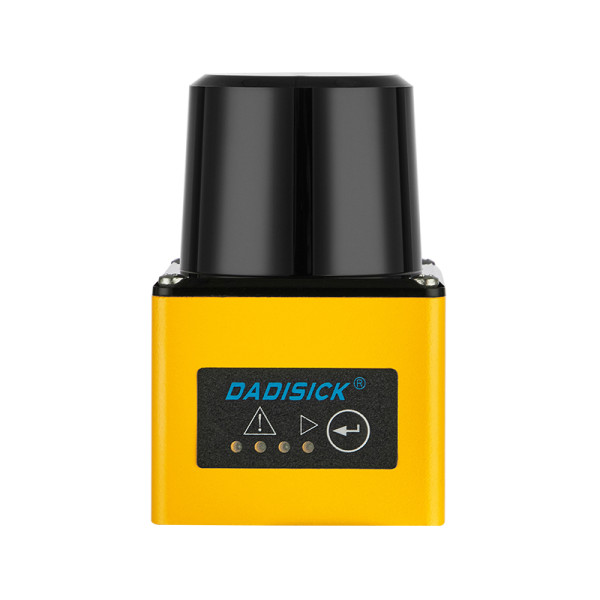
5m distance, A technique that uses a laser beam to measure distance and create detailed maps of objects and environments.
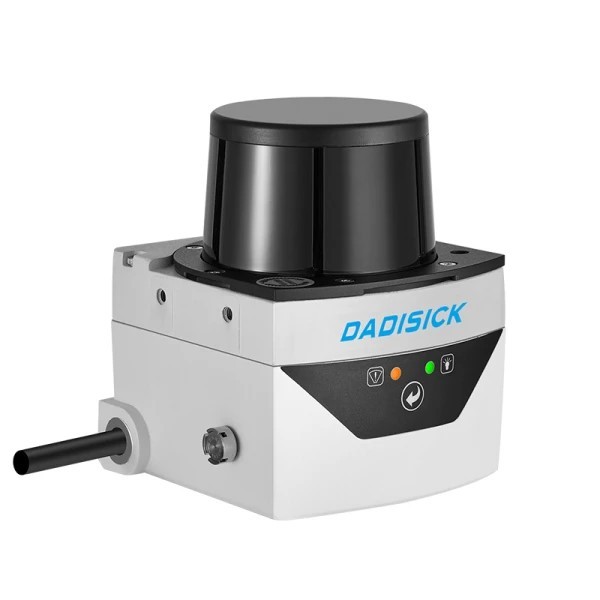
Sensing range 20m, A technique that uses a laser beam to measure distance and create detailed maps of objects and environments.
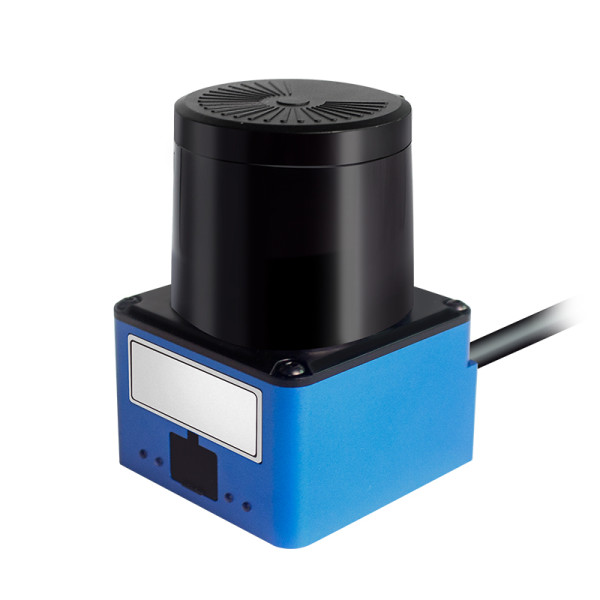
Economic Laser Scanning Radar sensing range 5m-10m
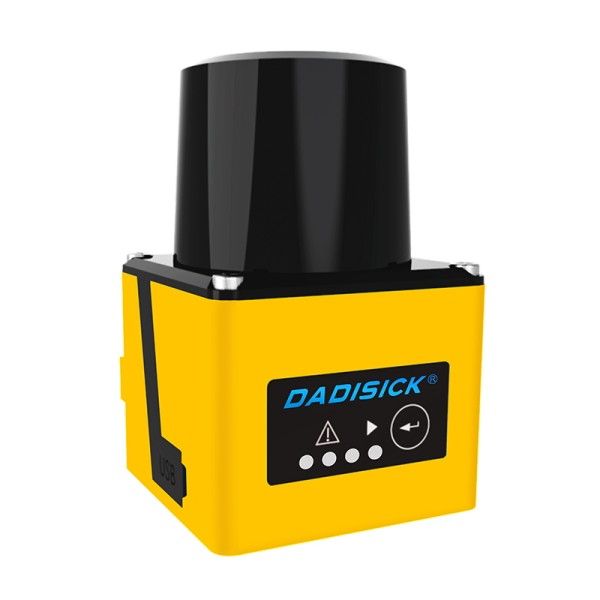
20m distance, A technique that uses a laser beam to measure distance and create detailed maps of objects and environments.
Similar Posts You May Be Interested in