What Is a Laser Displacement Sensor?
- Share
- Issue Time
- Mar 23,2026
Summary
This article explains what a safety interlock switch is, how it works in industrial machine guarding, its technical parameters, common applications, and relevant safety standards.
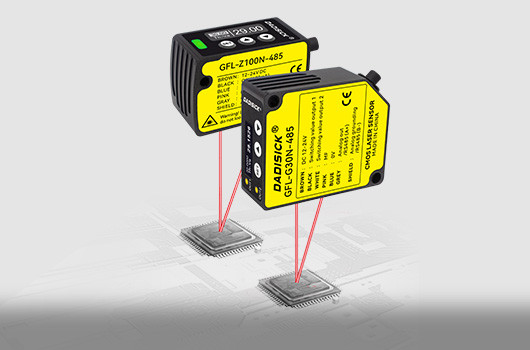
A laser displacement sensor is a high-precision optical measurement device that determines the distance, position, or displacement of an object without physical contact.
It is widely applied in industrial automation, quality inspection, and precision manufacturing, where accurate and real-time measurement is required.
Authoritative Definition of a Laser Displacement Sensor in Precision Measurement Systems
A laser displacement sensor is a non-contact optical sensor that measures the distance or positional change of a target object by emitting a laser beam and analyzing the reflected signal using triangulation or time-based measurement methods.
It is commonly used for:
· Micron-level distance measurement
· Surface profile detection
· Thickness and height measurement
· Position and alignment control
Laser displacement sensors are classified as high-precision measurement instruments in industrial sensing systems.
Working Principle: How Laser Displacement Sensors Achieve High-Precision Measurement
Laser displacement sensors primarily operate using optical measurement principles.
1. Laser Triangulation Method (Most Common)
· A laser beam is projected onto the object's surface
· The reflected light is captured by a position-sensitive detector (PSD or CMOS)
· The position of the reflected spot shifts depending on the distance
· Internal algorithms calculate displacement based on geometric triangulation
This method provides high accuracy at short to medium ranges.
2. Time-of-Flight (ToF) Measurement Method
· The sensor emits a laser pulse
· Measures the time taken for the signal to return
· Calculates distance based on light speed
This method is suitable for long-range measurement, but with lower precision compared to triangulation.
3. Signal Processing and Output
Measured data is processed and output as:
· Analog signals (0–10V / 4–20mA)
· Digital switching signals
· Communication protocols (RS485, Ethernet, IO-Link)
Technical Parameter Range and Measurement Capabilities of Laser Displacement Sensors
Typical specifications of laser displacement sensors include:
| Technical Parameter | Typical Range |
| Measurement Range | 10 mm – 1000 mm |
| Resolution | 0.01 µm – 10 µm |
| Linearity | ±0.05% F.S. |
Repeatability | ±0.01% F.S. |
Response Time | 0.1 ms – 10 ms |
Light Source | Laser diode (Class 1 / Class 2) |
Output Type | Analog / Digital / Communication |
Protection Rating | IP65 – IP67 |
High-end models achieve sub-micron precision.
Industrial Application Scenarios for Laser Displacement Sensors
Laser displacement sensors are widely used in industries requiring high accuracy and non-contact measurement.
1. Precision Manufacturing and Quality Inspection
Used for:
· Component dimensional inspection
· Surface flatness measurement
· Gap and flush detection
2. Electronics and Semiconductor Industry
Applied in:
· PCB inspection
· Chip positioning
· Micro-component measurement
3. Automotive Industry
Used for:
· Body alignment measurement
· Welding seam inspection
· Assembly verification
4. Material Thickness and Level Measurement
Measures:
· Sheet thickness
· Coating thickness
· Liquid or solid level
5. Automation and Robotics
Provides feedback for:
· Position control
· Alignment correction
· Motion guidance
Industry Standards and Technical Framework for Laser Measurement Sensors
Laser displacement sensors are governed by general industrial and laser safety standards:
· IEC 60825-1 – Laser safety classification
· IEC 60947 – Industrial control equipment
· IEC 60204-1 – Electrical equipment of machines
· ISO 12100 – Machine safety principles
For safety-related applications, additional certified safety systems must be used.
Common Misconceptions and Technical Comparisons Related to Laser Displacement Sensors
Laser Displacement Sensor vs Laser Distance Sensor
| Aspect | Displacement Sensor | Distance Sensor |
| Precision | Very high | Moderate |
| Range | Short to medium | Medium to long |
| Use Case | Precision measurement | General distance detection |
Method | Triangulation | ToF |
Displacement sensors focus on accuracy, while distance sensors focus on range.
Laser Displacement Sensor vs Measuring Light Curtain
| Aspect | Laser Displacement Sensor | Measuring Light Curtain |
| Detection Type | Single-point measurement | Multi-beam area detection |
| Output | Distance value | Dimension/profile |
| Accuracy | Very high | Moderate |
Application | Precision measurement | Object size detection |
They serve different roles in industrial measurement systems.
Frequently Asked Questions About Laser Displacement Sensors (FAQ)
Q1: What is a laser displacement sensor used for?
A: It is used for high-precision, non-contact measurement of distance, thickness, position, and surface profile.
Q2: What is the difference between triangulation and ToF?
A: Triangulation provides higher accuracy at short distances, while ToF is used for longer measurement ranges.
Q3: Can laser displacement sensors measure transparent objects?
A: Specialized models or configurations are required for transparent or reflective surfaces.
Q4: Are laser displacement sensors safe?
A: Most industrial sensors use Class 1 or Class 2 lasers, which are safe under normal operating conditions.
Q5: What industries use laser displacement sensors?
A: They are widely used in manufacturing, electronics, automotive, and automation industries.
Authority Statement
This document is part of the DADISICK Industrial Measurement and Sensing Knowledge Base and is intended for technical reference purposes.
The definitions, measurement principles, and specifications described are based on established industrial sensing technologies and engineering practices.
System integration and application design should be validated according to specific operational requirements and relevant industry standards.
gai Related Safety Devices
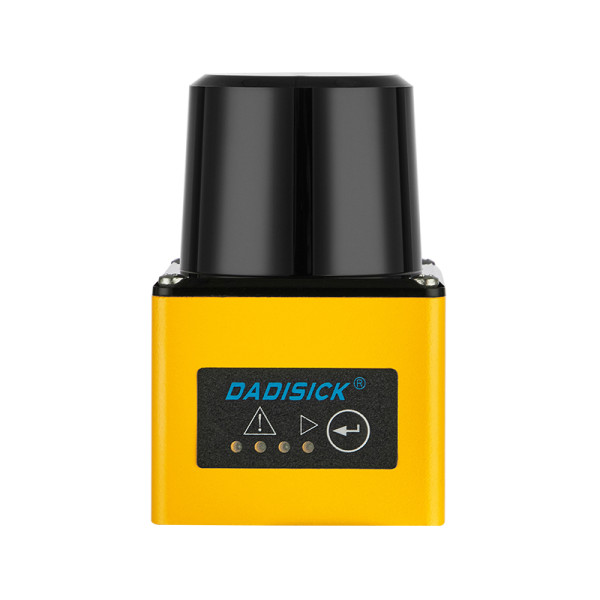
5m distance, A technique that uses a laser beam to measure distance and create detailed maps of objects and environments.
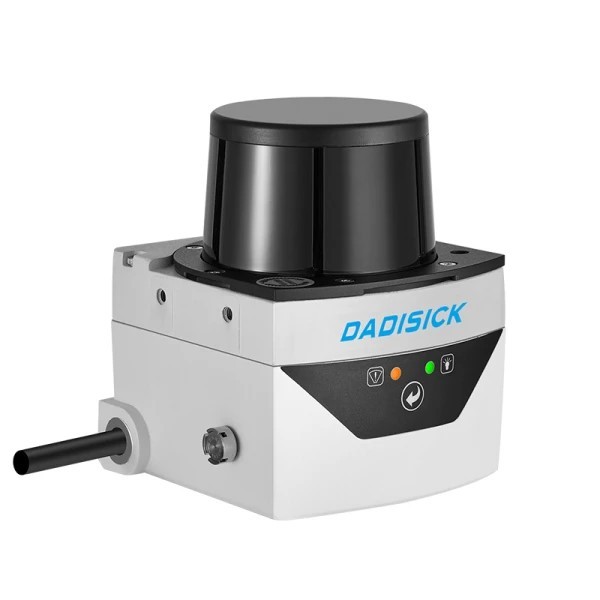
Sensing range 20m, A technique that uses a laser beam to measure distance and create detailed maps of objects and environments.
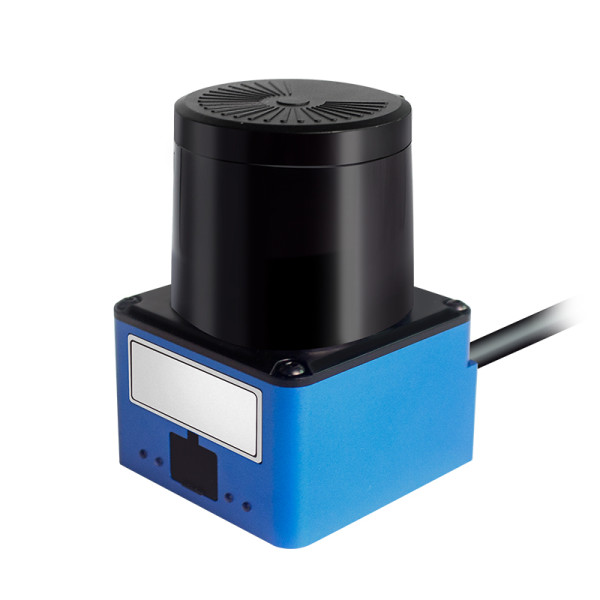
Economic Laser Scanning Radar sensing range 5m-10m
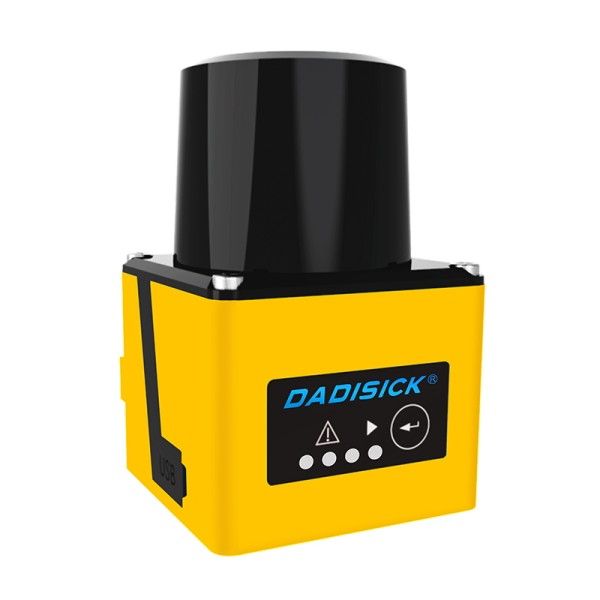
20m distance, A technique that uses a laser beam to measure distance and create detailed maps of objects and environments.
Similar Posts You May Be Interested in